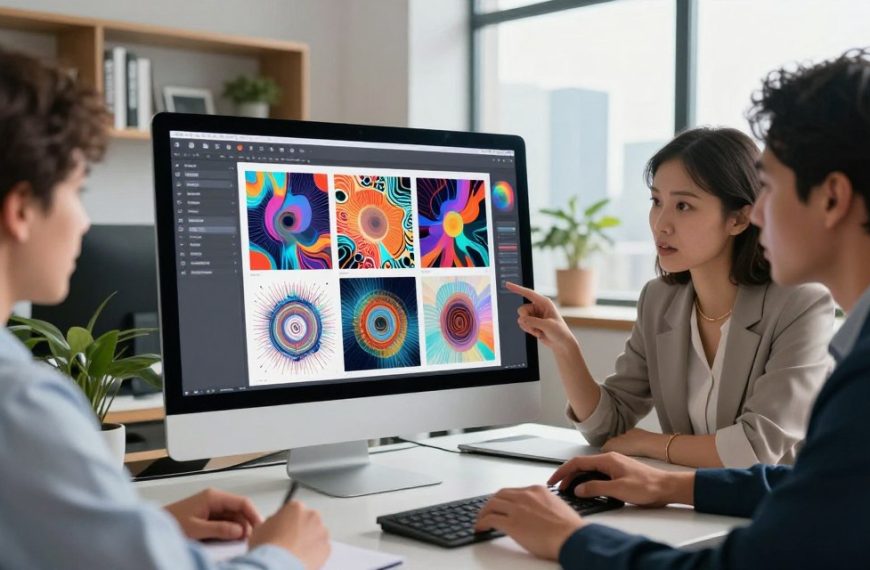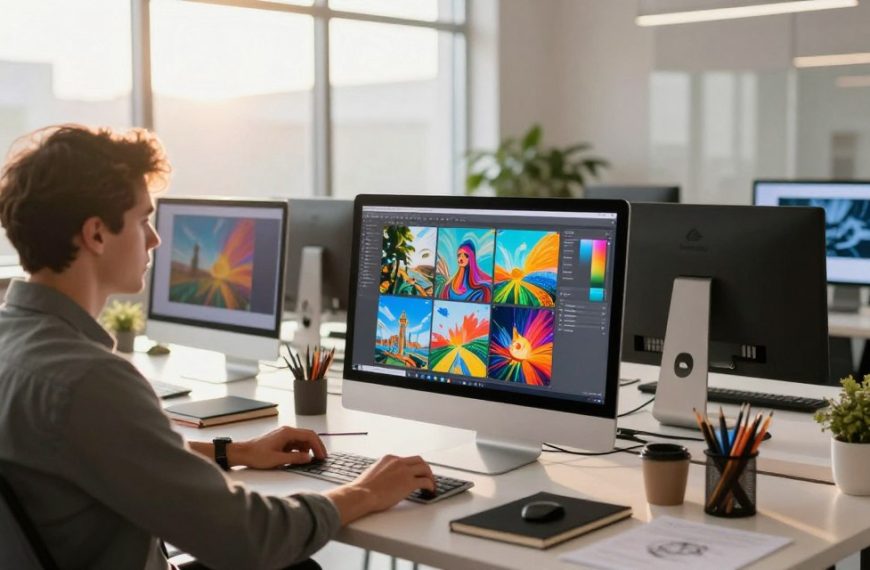

The world of art has changed a lot in recent years. Artificial intelligence has changed how we create images, making it faster and easier.
Today’s creative AI software lets artists do more than before. They can make amazing pictures just by typing what they want. This used to need a lot of skill and time.
This article looks closely at top text-to-image AI tools. We compare their features to help artists and designers find the best one for their work.
The comparison becomes clearer when you review free ai image generation and the trade-offs between quality, control, and usability.
Understanding AI Image Generation for Creative Professionals
For creative pros, getting AI image tools is key. These tools are more than fun gadgets. They are powerful helpers that can change how we work.
How AI Image Generators Work
AI image makers use advanced neural networks. These networks learn from millions of images and texts. They pick up on patterns and styles.
They start with random noise and shape it into images. This process is like making shapes in clouds clearer. The AI adds details step by step.
This method doesn’t copy images. It creates new ones based on what it’s learned.
Benefits for Artists and Designers
AI tools help artists and designers a lot. They can get past creative blocks and work faster.
They spark ideas and let artists see their ideas quickly. This helps them try out different looks fast.
AI makes unique images that stock photos can’t match. Designers can make special pictures for their projects. This is great for mockups and ideas.
AI tools work well with software like Adobe Creative Cloud. This makes adding AI images to projects easy. It helps make work flow better without changing how we do things.
| Benefit Category | Practical Application | Time Savings |
|---|---|---|
| Concept Development | Rapid visualisation of ideas | 60-70% reduction |
| Asset Creation | Custom imagery generation | 50-80% faster |
| Workflow Integration | Direct software compatibility | 30-40% efficiency gain |
| Creative Exploration | Style and composition testing | 75% quicker iteration |
These tools open up new creative paths and save time. They let pros focus on making things better, not just starting from scratch. AI is a partner in creativity, not a replacement for human talent.
Evaluating the Best AI Image Generation Tools
Choosing the right AI image generator is important. You need to look at each tool’s strengths and weaknesses. This review looks at three top platforms that have changed digital art.
Midjourney
Overview
Midjourney is a top choice for artists who want amazing art. It works through Discord and is known for its high-quality art.
Pros
Superior artistic output means the art looks stunning. It can handle complex scenes well. Many say it’s the best for projects that need to impress.
Cons
Images are public by default, which can be a problem for business projects. The Discord interface might feel old-fashioned. Some find it harder to learn than other tools.
Features
It has advanced style options for artists. You can adjust the image size and shape. It also gets better with updates.
DALL-E 2
Overview
DALL-E 2 is easy to use, thanks to OpenAI. It’s part of ChatGPT, making it simple to create art with just a chat.
Pros
Exceptional prompt adherence is great for all users. You can edit your art in a natural way. It works well with ChatGPT.
Cons
It can be slow during busy times. The image quality might not be enough for some users. Some styles are hard to get right.
Features
It has cool features like in-painting and out-painting. It also keeps your art safe. It gets better with updates.
Stable Diffusion
Overview
Stable Diffusion is open-source and customizable. It’s perfect for tech-savvy users who want control.
Pros
Complete local operation means it’s private and free. You can change it a lot. Tech users love the detailed control.
Cons
Stability AI, the company behind it, has financial worries. It’s not easy to start using. The quality can vary.
Features
It’s easy to train and fine-tune models. You can add new features with plugins. You can use it locally or in the cloud.
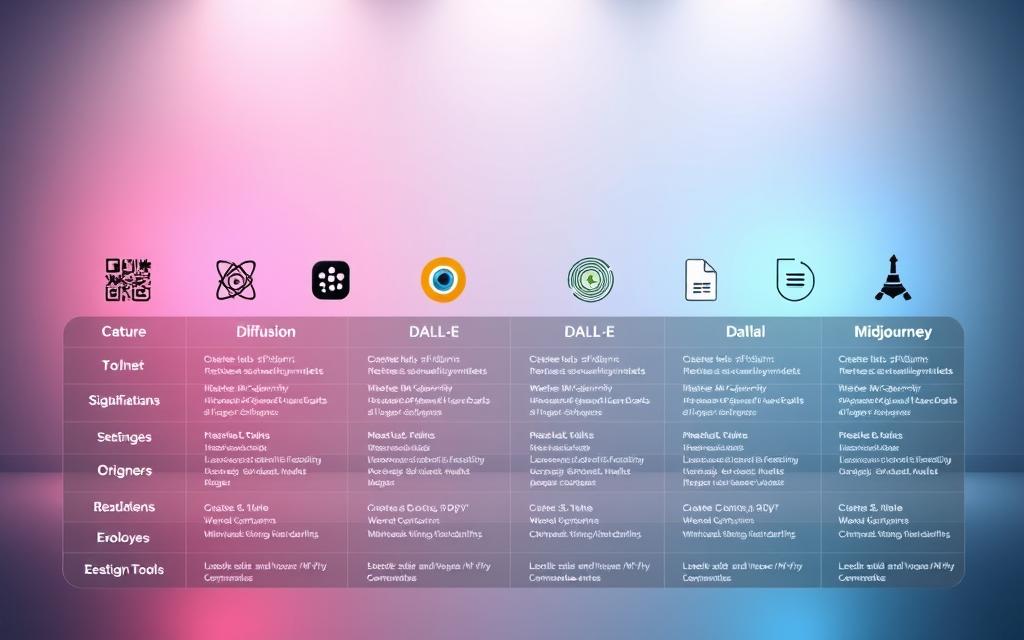
This detailed analysis of leading AI image tools gives more insight. Each tool has its own benefits, depending on what you need and how tech-savvy you are.
Specialised AI Image Generation Solutions
There are AI image tools made for specific needs in creative work. They meet the needs of certain industries better than general tools.
Adobe Firefly
Overview
Adobe Firefly is a big step forward in ethical AI training. It uses Adobe’s Stock library, not internet content. This way, creators get paid and the quality stays high.
Pros
- Works well with Adobe Creative Cloud and Photoshop
- Uses ethically sourced data with proper licenses
- Good for commercial projects with high-quality output
- Has advanced generative fill for detailed editing
Cons
- Best for those already using Adobe
- Less experimental than some rivals
- Requires a subscription
Features
Firefly’s best feature is its deep link with Creative Cloud apps. The generative fill lets designers add to images, remove things, or make new parts. It also gets design terms, helping experienced creatives.
Runway ML
Overview
Runway ML is a full creative suite that goes beyond static images. It has tools for various media, including video editing AI.
Pros
- Wide range of tools for images and videos
- Allows for detailed output customisation
- Gets regular updates with new stuff
- Quality is high enough for commercial use
Cons
- Can be hard for beginners to learn
- More expensive for advanced features
- Some features need AI knowledge
Features
Runway ML stands out with its video editing AI tools. It lets creators work on video with AI help. It has tools for editing frames, tracking motion, and compositing, great for motion graphics and video editing.
Implementing AI Tools in Creative Workflows
Choosing the right tools is just the start. Professionals need to learn how to use them well and responsibly. This means knowing the technical side and the ethical limits. We’ll look at how to use AI image generation in creative work.
Workflow Integration Techniques
AI can make creative work easier by automating tasks. Many use AI image generators with their tools through APIs and automation platforms. For example, OpenAI’s API can work with Zapier to make images from other apps.
Here are some ways to integrate AI:
- AI can create initial ideas before humans do the detailed work
- AI can make blog post images from content management systems
- AI can make social media content in batches for marketing plans
- AI can create presentation visuals from outlines
Good prompt engineering is key for AI to work well. Well-written prompts help keep the quality of AI-made content high. Teams often create libraries of prompts for things like branding or illustration styles.
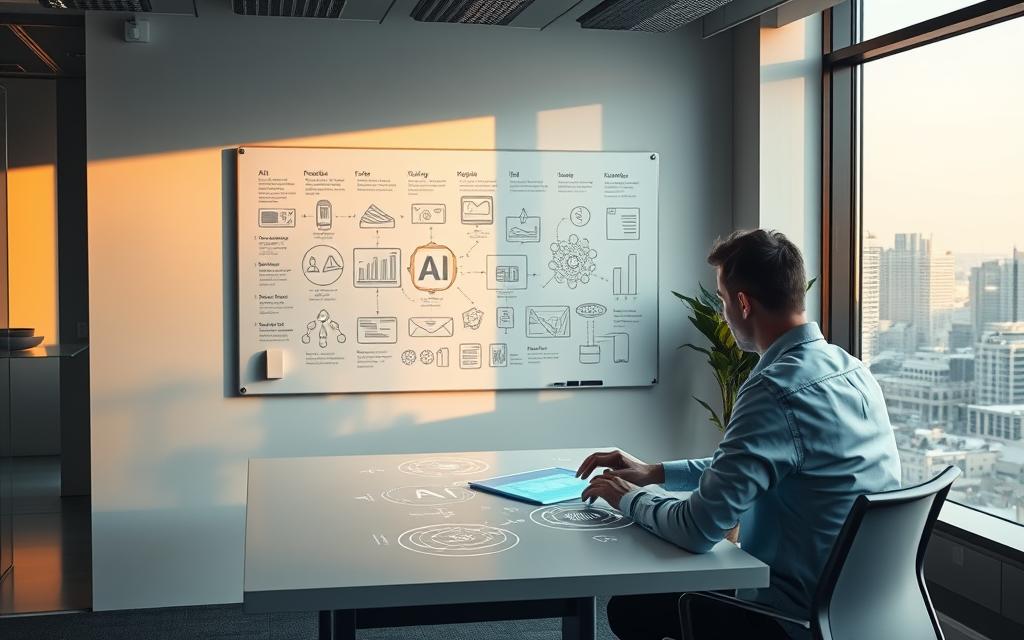
For more on automating workflows, many platforms offer advanced integration. The goal is to find tasks that AI can do quickly without losing quality.
Ethical Considerations and Best Practices
The issue of copyright and AI art is important. AI tools often use existing art, which raises questions about who owns the rights. Users should check where the tools get their data and if they can opt out.
Responsible AI use means several things:
- Checking the privacy policies of AI tools about who owns the content
- Respecting requests from artists not to use their work in training data
- Telling clients about AI help in the final work
- Seeing AI as a helper, not a full replacement for human creativity
The laws around copyright and AI art are changing. It’s important for professionals to keep up with these changes. Many companies are making rules for using AI responsibly.
Being open about AI help is key to using it ethically. This builds trust with clients and the public. Used right, AI can boost human creativity, opening up new ways to express art.
Conclusion
The world of AI image generation is full of powerful tools, each with its own strengths. Midjourney is great for beauty, DALL-E 2 for ideas, and Stable Diffusion for detailed control. Adobe Firefly and Runway ML make it easy to fit these tools into your work.
Choosing the right tool depends on what you need for your project. Think about your budget and what you want to achieve. Whether it’s realistic images or creative ideas, picking the right tool is key.
These AI tools are changing the game for artists and designers. They help us create new and exciting things. By using these tools, you can take your work to the next level and keep up with the latest trends.

 By
By