

The year 2025 was a big year for Robinhood Crypto. They had $51 billion in digital assets under custody by the third quarter. They also listed over 45 different tokens for traders in the United States.
This growth was huge, with $232 billion in notional trading volume. The platform’s growth shows more people are interested in blockchain investments.
At the same time, AI in cryptocurrency has made big strides. Projects using AI for smarter contracts and predictive analytics are becoming popular.
So, the trading app is now a key place for these new smart digital assets. This article will guide you through the most promising AI-driven tokens on Robinhood.
We’ll look at their key features, practical uses, and how to trade them in 2025’s fast-changing market.
The Convergence of Artificial Intelligence and Cryptocurrency
The mix of AI and crypto is a big deal for 2025. It’s not just a trend. It’s a big change in how smart systems and digital economies work together.
This mix uses the best of both worlds. Artificial intelligence can learn, predict, and do complex tasks. Blockchain makes transactions safe and open. Together, they create a new way to build apps.
This mix is changing how projects are made. It’s moving from ideas to real things that people want and invest in.
| AI Capability | Blockchain Integration | Key Benefit |
|---|---|---|
| Decentralised Machine Learning | Training models on distributed data without centralised control | Enhanced privacy, censorship resistance, and collaborative intelligence |
| Autonomous Agents | AI-driven programmes that execute contracts and trades independently | 24/7 operational efficiency and complex strategy execution |
| Improved Data Markets | Tokenising and securely monetising data sets on a ledger | Fair compensation for data providers and access to high-quality training data |
| Efficient Compute Allocation | Matching unused GPU power with AI processing demands via tokens | Reduced costs for AI development and better resource utilisation |
This new tech mix is opening up new possibilities. For example, it lets models learn from data without it leaving the owner’s device. This solves big privacy issues in AI.
Autonomous agents are also a big step forward. They can look at market data, make trades, and manage money. They follow the rules set in smart contracts.
The most exciting crypto projects in 2025 are about more than just money. They’re about creating smart, self-improving economies. The AI blockchain stack is the key to making this happen.
Why is 2025 so important for AI and crypto? It’s the year when these ideas go from being ideas to real, working systems. Tools have improved, and more people are using them. Investors are putting money into these projects.
Investors, both big and small, are putting money into these projects. They see that AI makes crypto better, more useful, and more appealing. This creates a cycle of growth and more money coming in.
Improved data markets are another example. AI needs lots of data to work well. Blockchain makes it safe and fair to buy and sell data. This ensures data is real and priced right.
Also, using crypto tokens to share computer power is solving a big problem in AI. High-performance computing is expensive and often not used. Tokenised networks make it easier to find and use this power, saving money.
Understanding this bigger picture is key to looking at AI crypto coins. Each coin’s value comes from how well it uses these new ideas. This sets the stage for looking at specific projects.
Looking at 2025 crypto trends, AI and blockchain are not just extras. They are the heart of new digital apps. This mix is the background for looking at specific assets.
Robinhood’s Evolving Crypto Strategy for 2025
Robinhood’s crypto strategy for 2025 included launching advanced trading features and expanding into new markets. This move made the platform a strong choice for traders, focusing on artificial intelligence assets.
The Robinhood Legend interface was a key part of this upgrade. It offered advanced charting tools, far beyond simple line graphs. Users got real-time technical analysis, custom drawing tools, and a wide range of indicators for AI crypto markets.
Cortex Digests was another important feature. It used machine learning to scan market data, news, and social sentiment. It then gave users quick, useful summaries, helping AI coin traders stay on top of project developments and market trends.
Robinhood also made trading more affordable. It introduced new fee tiers, with rates as low as 0.03% for high-volume traders. The platform also started crypto staking services, allowing users to earn rewards on certain assets. Over 45 cryptocurrencies were supported in the U.S., including AI sector tokens.
The platform’s reach expanded significantly. By 2025, Robinhood’s crypto services were available in over 30 countries, including the European Union. This growth increased liquidity and diversified the user base. The planned Robinhood Chain, a Layer 2 network, suggests future tokenisation and blockchain integration.
The combination of advanced tools, competitive pricing, and global access makes Robinhood a great place for new asset classes.
In summary, Robinhood’s 2025 strategy turned it into a full trading ecosystem. The Robinhood Legend tools enhance technical analysis, while Cortex Digests offer an AI-driven edge. With lower fees, staking, and a wide range of assets, these Robinhood trading features make it a strong choice for AI cryptocurrencies.
Criteria for Selecting Promising AI Crypto Assets
Before investing in AI crypto projects, investors use strict criteria. The market is full of ideas, but the best projects stand out. They excel in key areas and show real innovation.
The first key is underlying technology and innovation. What AI problem does the blockchain solve? Is it new or just a new use of old tools? Look for clear tech details, active GitHub, and a roadmap with clear goals. The best projects offer a real advantage in AI areas.
Another important factor is the strength and transparency of the team. A good project has experts in AI and blockchain. Check their past work and how they interact with the community. A team that changes often is a warning sign.
The digital asset space is evolving. Investors now focus on utility, team quality, and economic models.
Next, look at real-world adoption and partnerships. A good whitepaper is not enough without action. Look for live products and partnerships with big companies. These show the project’s usefulness and growth.
Token utility and economics are key. What does the token do? Is it for fees, governance, or services? Check how the token is distributed and its inflation. A good model aligns everyone’s interests. Robinhood’s crypto staking feature adds a yield, turning a holding into income.
Don’t overlook community engagement. A strong community drives development and security. Check social media and forums. A community that contributes is valuable, while speculation may show a lack of interest.
| Evaluation Criteria | Key Questions for Investors | Why It Matters |
|---|---|---|
| Technology & Innovation | Is the AI application unique and necessary? Is the code open-source and actively developed? | Determines long-term competitive advantage and solves real problems. |
| Team & Leadership | Do founders have relevant expertise? Is the team structure stable and transparent? | A capable team is essential for navigating technical challenges and executing the vision. |
| Adoption & Partnerships | Are there live products or major collaborations? Is there a clear path to user growth? | Validates market need and provides a moat against competitors. |
| Token Utility & Economics | What is the token’s core use case? Is the supply model sustainable and fair? | Defines the asset’s intrinsic value and its growth or yield. |
| Community & Governance | Is the community constructive and engaged? Is governance decentralised and active? | Fosters network effects, security, and decentralised decision-making. |
By using these five criteria, investors can build a strong portfolio. No project is perfect, but the best ones excel in several areas. Remember, features like crypto staking on Robinhood are great, but they should support a solid analysis, not replace it.
Major Layer 1 AI Cryptocurrencies
A new generation of blockchains is emerging. They power autonomous AI economies and data markets. These networks provide a secure, scalable environment for AI to operate and transact value. They are the core infrastructure for AI applications.

This section looks at three leading projects. Each has carved out a distinct niche in the AI and crypto convergence. We’ll examine their technology, use cases, and growth on platforms like Robinhood.
Fetch.ai (FET)
Overview
Fetch.ai is building a decentralised machine learning network. It’s powered by autonomous economic agents. These agents perform tasks, make decisions, and trade data without constant human oversight.
The Fetch.ai FET token is the lifeblood of this ecosystem. It facilitates all transactions, including payments for services and staking for network security. The vision is vast, targeting sectors from supply chain logistics to decentralised finance.
Key Features & Technology
The core innovation is the Autonomous Economic Agent (AEA). Each AEA represents a user, company, or device. They can negotiate with other agents to complete complex tasks.
Technically, the network utilises a combination of machine learning, multi-agent systems, and a proof-of-stake blockchain. This allows for high-speed, low-cost transactions essential for real-world agent interaction. The team also focuses on interoperable “digital twins” for the Internet of Things.
Pros
- First-Mover Advantage: Fetch.ai has a long development history, providing a technological head start in the autonomous agent space.
- Real-World Utility: Its partnerships with major firms in mobility and energy demonstrate tangible use cases beyond speculation.
- Active Ecosystem: A robust developer community is constantly building new tools and agent-based applications.
Cons
- Complex Vision: The sheer scope of the project can be difficult for new users to grasp, potentially slowing mainstream adoption.
- Competition: Other projects are exploring similar concepts of decentralised automation, increasing market rivalry.
- Execution Risk: Delivering on the promise of a fully functional agent economy requires flawless long-term execution.
SingularityNET (AGIX)
Overview
SingularityNET operates as a decentralised marketplace and platform for artificial intelligence services. Its mission is to democratise AI access. Developers can publish their AI tools, and users can browse, test, and pay for them using the platform’s native token.
The SingularityNET AGIX token is used for all transactions within this marketplace. It allows anyone to monetise their AI algorithm or leverage someone else’s creation without corporate intermediaries. This creates a global network of AI intelligence.
Key Features & Technology
The platform’s architecture allows AI services, from image recognition to natural language processing, to communicate seamlessly. A developer in Tokyo can create a service that a startup in Berlin integrates into its product, with payments handled automatically by smart contracts.
A key technological focus is on Artificial General Intelligence (AGI) research. The project funds long-term AGI development, aiming for a future where AI can perform any intellectual task a human can. This ambitious research agenda sets it apart from purely commercial ventures.
Pros
- Clear Marketplace Model: The concept of an “App Store for AI” is intuitive and addresses a clear need for accessible AI tools.
- Strong Research Pedigree: Led by renowned AI researcher Dr. Ben Goertzel, the project has significant credibility in the AI community.
- Interoperability Focus: It is designed to integrate AI services across different blockchains, enriching its reach.
Cons
- Niche Audience: The primary users are currently AI developers and researchers, which may limit short-term, widespread token utilisation.
- AGI Uncertainty: The long-term bet on Artificial General Intelligence is highly speculative and faces immense scientific hurdles.
- Marketplace Liquidity: The success of the token hinges on vibrant marketplace activity, which is in its growth phase.
Ocean Protocol (OCEAN)
Overview
Ocean Protocol tackles a fundamental problem in the AI world: data access. It provides a framework to unlock data, allowing it to be shared and monetised while preserving privacy and control for the data owner. In essence, it creates a data economy.
The Ocean Protocol OCEAN token is used for staking, buying, and selling data services. Data providers can tokenise their datasets, setting their own terms for access. AI models can then be trained on this vast, previously siloed information.
Key Features & Technology
The technology centres on “Data Tokens,” which wrap datasets into tradable assets. These tokens leverage standardised smart contracts, making data as easy to exchange as cryptocurrencies. A key feature is “Compute-to-Data,” which allows algorithms to run on data without the data ever leaving the owner’s server.
This privacy-preserving technique is a breakthrough. It enables sensitive data, from healthcare records to financial information, to be utilised for AI training without compromising confidentiality. The network also includes a marketplace for discovering these data assets.
Pros
- Critical Niche: It addresses the essential fuel for AI—high-quality data—in a secure, decentralised manner.
- Strong Privacy Focus: The Compute-to-Data technology is a significant competitive advantage for handling sensitive information.
- Enterprise Appeal: The model is highly attractive to corporations and institutions sitting on valuable but unused data troves.
Cons
- Regulatory Gray Area: The tokenisation and trading of data may face complex and evolving regulatory scrutiny across different jurisdictions.
- Network Effect Challenge: The value of the protocol depends on attracting both data publishers and consumers, a classic two-sided market problem.
- Technical Complexity for Users: Data tokenisation and managing data wallets present a steep learning curve for non-technical users.
| Feature | Fetch.ai (FET) | SingularityNET (AGIX) | Ocean Protocol (OCEAN) |
|---|---|---|---|
| Primary Focus | Autonomous Agents & Machine Learning | Decentralised AI Marketplace | Data Exchange & Monetisation |
| Core Technology | Autonomous Economic Agents (AEAs) | Interoperable AI Service Network | Data Tokens & Compute-to-Data |
| Token Utility | Agent Transactions, Staking, Fees | Marketplace Payments, Staking, Governance | Data Purchases, Staking, Governance |
| Target Market | IoT, DeFi, Supply Chain | AI Developers, Researchers | Enterprises, Data Scientists |
| Investment Thesis | Automation of Complex Economic Tasks | Democratisation of AI Tool Access | Unlocking the Value of Siloed Data |
This comparative view highlights how each Layer 1 AI cryptocurrency solves a different piece of the puzzle. Fetch.ai automates processes, SingularityNET democratises AI tools, and Ocean Protocol unlocks data. Their success on a platform like Robinhood will depend on demonstrating real-world adoption and sustained network growth.
AI Infrastructure and Compute Tokens
The backbone of AI’s blockchain integration is built on special tokens. These tokens provide decentralised computational resources. Many projects focus on AI applications, but these tokens power the engines.
They solve big problems in AI development: high costs, limited access to powerful hardware, and centralised control. For investors, this sector is a bet on the AI economy’s foundation. If demand for AI compute and machine learning grows, the networks could see big value increases.
Render Token (RNDR)
Overview
Render Token (RNDR) connects users needing GPU compute power with owners of idle graphics cards. It started with rendering digital graphics but is now great for AI training and inference. The network uses a global pool of GPUs for a scalable and cost-effective solution.
The RNDR token is used to pay for jobs in this ecosystem. Node operators earn tokens for their GPU resources. This creates a peer-to-peer marketplace for high-performance computing.
Key Features & Technology
The network uses a proof-of-render system to validate work before paying. It has a tiered pricing model, considering GPU performance, rendering speed, and artist reputation.
The OctaneRender engine, used in the network, is great for complex neural network visualisations. The team is expanding into neural rendering and other AI tasks.
- Decentralised GPU Pool: Uses underutilised graphics cards worldwide.
- Scalable Architecture: Dynamically allocates resources based on job complexity.
- Integrated Ecosystem: Works well with popular creative software like Cinema 4D and Blender.
Pros
Render Token offers a clear value proposition. It provides GPU power at rates often below traditional cloud services. The network’s growth is tied to the demand for AI and graphics rendering.
The project has partnerships with major industry players, adding credibility. Its community of artists and node operators is strong, ready for AI workloads.
Cons
The project faces stiff competition from large, well-funded cloud providers like AWS and Google Cloud. These giants are investing in AI-specific hardware, challenging Render’s cost advantage.
Tokenomics are a point of scrutiny. The total supply and emission schedule must be managed to avoid inflation. Network adoption for pure AI tasks, beyond rendering, is in its early stages.
Akash Network (AKT)
Overview
Akash Network (AKT) is like an “Airbnb for cloud computing.” It’s a decentralised marketplace for cloud compute resources, cheaper than AWS, Google Cloud, and Microsoft Azure. It’s optimised for deploying containerised applications, the standard for modern AI and machine learning models.
The network lets anyone with spare server capacity lease it out. Developers can bid for that capacity. This model introduces unprecedented price competition into the cloud market.
Key Features & Technology
Akash’s core technology is its reverse auction mechanism. Developers state the resources they need, and providers compete to offer the lowest price. This ensures users get the best deal.
The platform is built on Cosmos SDK, ensuring interoperability with other blockchain ecosystems. It supports all cloud-native tools, making AI deployment easy.
“Akash’s decentralised marketplace fundamentally changes the economics of cloud compute, putting downward pressure on prices and giving developers more choice.”
Pros
The primary advantage is significant cost reduction. Users save up to 90% compared to centralised providers. This is a big incentive for AI startups and researchers.
Its permissionless and censorship-resistant nature is another key benefit. Developers can deploy applications without fear of de-platforming. The use of the AKT token for staking, governance, and payments creates a cohesive economic loop.
Cons
As a younger ecosystem, Akash Network currently has a smaller total supply of available high-end GPUs compared to AWS. This could limit its appeal for large-scale, enterprise AI training jobs in the short term.
The user experience, while improving, may present a learning curve for teams used to major cloud providers. The long-term success of its tokenomics relies on sustained growth in platform usage.
Bittensor (TAO)
Overview
Bittensor (TAO) is a decentralised intelligence market. It creates a peer-to-peer network where machine learning models train collaboratively and are rewarded for the value of the information they produce.
Think of it as a global, incentivised brain where AI models contribute knowledge and are paid in TAO tokens based on the usefulness of their contributions. This aims to decentralise AI development itself.
Key Features & Technology
Bittensor’s architecture is based on specialised subnets. Each subnet is a market for a specific type of intelligence, such as text prediction, image generation, or data curation. Models (miners) within a subnet compete to provide the best outputs.
Validators on the network score these outputs using a consensus mechanism. Models that provide more valuable information receive a larger share of the TAO tokens minted in that subnet. This is powered by a unique proof-of-intelligence mechanism.
- Yuma Consensus: Determines the rank and reward distribution among participants.
- Subnet Mechanism: Allows for endless specialisation and innovation in different AI domains.
- Incentive-Driven Growth: Aligns economic rewards with the production of useful machine intelligence.
Pros
Bittensor’s model is highly innovative. It directly incentivises the creation and sharing of AI intelligence, potentially accelerating open-source AI development. Its subnet structure makes it incredibly flexible and adaptable to new AI paradigms.
The protocol has attracted a passionate community of developers and researchers. Its native TAO token has a capped supply and a Bitcoin-like halving mechanism, appealing to investors seeking digital scarcity within the AI sector.
Cons
The concept is complex and abstract compared to more straightforward compute marketplaces. This can make it difficult for average investors to evaluate its real-world utility and adoption metrics.
As a pioneering protocol, it faces unproven technical risks. The security and game-theoretic soundness of its incentive mechanisms are being tested at scale. Regulatory scrutiny around decentralised AI networks could also pose a future challenge.
| Token | Primary Use Case | Core Consensus/Mechanism | Key Investor Consideration |
|---|---|---|---|
| Render Token (RNDR) | Decentralised GPU Compute & Rendering | Proof-of-Render (Work Verification) | Competition with hyperscale cloud providers |
| Akash Network (AKT) | Decentralised Cloud Compute Marketplace | Reverse Auction & Delegated Proof-of-Stake | Adoption growth for complex AI workloads |
| Bittensor (TAO) | Decentralised Machine Intelligence Market | Yuma Consensus (Proof-of-Intelligence) | Complexity and novelty of the economic model |
AI-Powered DeFi and Trading Platforms
AI is changing many areas, not just making new blockchains. It’s making big changes in finance and logistics with special tokens. These projects use AI in their core, giving real benefits and aiming at big markets.
This is interesting for investors who want more than just general crypto. We’ll look at two examples: a special hedge fund and a logistics platform.
Numeraire (NMR)
Numeraire is a unique hedge fund powered by AI. It uses crypto to reward data scientists all over the world.
Overview
The NMR token is key to Numerai. Data scientists use NMR to make stock market predictions with AI. The best predictions earn more NMR, while bad ones lose it. This creates a smart system for financial insights.
Key Features & Technology
Numerai’s model is built on several new ideas:
- Crowdsourced AI: It uses many data scientists to reduce bias.
- The Erasure Protocol: NMR is part of this protocol, used for posting and staking on information.
- Encrypted Data: Scientists work on encrypted data, keeping Numerai’s edge safe while keeping things fair.
Pros
- Proven Track Record: Numerai manages real money, linking crypto rewards with traditional finance.
- Strong Economic Model: Its staking and burning system works well for the network and its users.
- Unique Value Proposition: It’s a rare mix of AI, DeFi, and finance, with few rivals.
Cons
- Regulatory Complexity: Running a global hedge fund raises tricky security rules.
- Niche Appeal: Its use is mainly for data scientists and finance, limiting its appeal.
- Market Correlation Risk: Its value could be tied to traditional market ups and downs.
dKargo (DKA)
dKargo uses AI and blockchain to fix supply chain problems. It aims for a trusted, shared logistics network where data is key.
Overview
The DKA token runs the dKargo platform. It’s used for logistics services, securing the network, and rewarding reliable data providers. It’s focused on the real-world asset (RWA) part of blockchain.
Key Features & Technology
dKargo combines several important technologies:
- Consortium Blockchain: A network for known logistics companies, ensuring trust and speed.
- AI-Powered Optimization: AI looks at shipment data to predict delays and improve routes.
- Data Verification System: A system that checks data through IoT sensors, making it safe and reliable.
Pros
- Solves a Massive Problem: It tackles the huge logistics industry, ready for digital change.
- Clear Enterprise Focus: It’s made for big logistics companies to join.
- Dual Utility Token: DKA is used for payments and as a staking asset in the ecosystem.
Cons
- Adoption Hurdles: Getting big companies to join is slow and hard.
- Competitive Landscape: It faces competition from other blockchain projects and big tech companies.
- Complexity: Its value is hard for some investors to understand, unlike more straightforward crypto projects.
Emerging AI Meme Coins and Narrative Tokens
A new world of AI crypto is buzzing with excitement. It’s where cool tech meets meme culture. For some investors, this mix is a thrilling gamble, blending AI’s promise with the power of community.
These projects often get a lot of attention on social media. They dream of changing how AI works in Web3. But, investors need to be careful, as this space is full of risks and opportunities.
Artificial Liquid Intelligence (ALI)
Overview
Artificial Liquid Intelligence (ALI) is all about AI, gaming, and digital identity. It wants to create a world of smart, unique digital beings. These AI characters can learn and interact, making them more than just pictures.
The ALI token is at the heart of this world. It helps the network run smoothly and lets users buy and sell AI assets.
Key Features & Technology
ALI’s tech gives AI a “soul.” It lets AI characters remember and have their own personalities. This is done using machine learning and blockchain.
- iNFT Protocol: A standard for minting intelligent NFTs that can be integrated into various dApps and metaverses.
- Character Engine: AI tools that enable the generation of unique characters with customisable traits and behaviours.
- ALI Token Utility: Used for minting iNFTs, participating in governance, and rewarding network contributors.
Pros
Investing in Artificial Liquid Intelligence ALI could be rewarding. It focuses on AI in digital identity, a growing area. The project has early partnerships and a working product, showing it’s serious.
The tokenomics are designed to help long-term holders. Its story is easy to grasp, which could attract a lot of support.
Cons
The main downsides are its speculative nature and early stage. The market for intelligent NFTs is new and faces tough competition. The tech is complex, and its success is not guaranteed.
The price of ALI can swing wildly. It’s influenced by social media trends more than its real value. There’s also a risk from unclear AI and digital asset laws.
Cortex (CTXC)
Overview
Cortex (CTXC) is more about the tech. It aims to be a place for AI models on the blockchain. It lets developers share and users interact with AI, all for a fee in CTXC tokens.
Unlike some projects, Cortex is for many AI dApps. It’s not just for one thing.
Key Features & Technology
Cortex’s big innovation is its virtual machine. It works with AI frameworks, making smart contracts smarter. This brings AI to the blockchain.
- Cortex Virtual Machine (CVM): Supports AI-oriented instructions, enabling the integration of pre-trained models into smart contracts.
- Model Zoo: A public repository where developers can share, stake, and monetise their AI models.
- Consensus Mechanism: Utilises a delegated proof-of-stake (DPoS) system to secure the network and validate transactions efficiently.
Pros
The Cortex CTXC project tackles a big challenge: mixing AI with blockchain. It has a mainnet and tools for developers. This could make it key for future AI apps.
The token has a clear use for AI services. This might make it more stable than other coins.
Cons
Cortex faces a big challenge: getting developers to use its platform. It’s up against more general blockchains. Running AI models on-chain can be expensive, limiting what’s possible.
Adoption has been slower than hoped. The project is in a competitive space. The value of CTXC depends on its growing ecosystem.
Evaluating AI Crypto Coins on Robinhood
When looking at AI cryptocurrencies on Robinhood, you need a detailed approach. This involves more than just checking prices. You must look at the project’s tech, its market standing, and how it fits into Robinhood.
Start with Robinhood’s research tools. The Cortex Digests tool collects news and social views on listed assets. This helps you see what people are talking about and what big updates are happening. For deeper analysis, use Robinhood Legend to get advanced charts and historical data. These tools are great for starting your research.
Next, check if the AI coin can be traded and what support it offers. Not all coins work the same way on Robinhood. Some can be traded, offer rewards, or just be watched. Also, support can change based on where you live. Always check the coin’s page on the app for the latest info. This is important as Robinhood works on a new solution, Robinhood Chain, for trading assets.
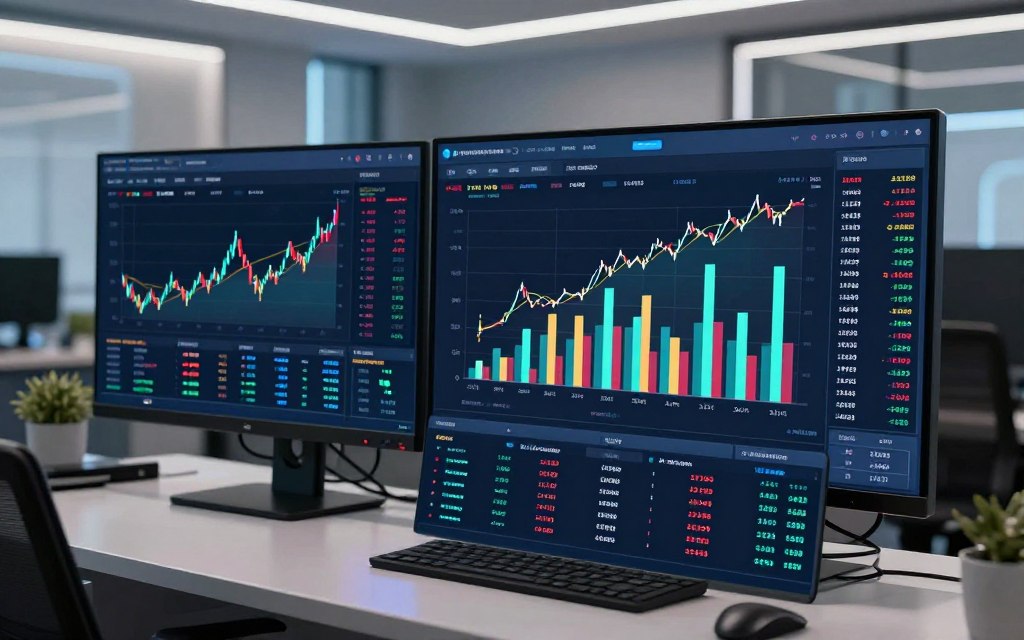
Tokenisation is becoming big, turning real and digital things into on-chain assets. It’s key to see if the AI coin fits into this growing world. Does it help create or manage these assets? This can tell you if the coin is just a flash in the pan or has a future.
To make your evaluation easier, think about these main points. A table can help you see how important each point is.
| Evaluation Criteria | Key Questions to Ask | Primary Robinhood Tool |
|---|---|---|
| Tokenomics & Supply | What is the total and circulating supply? Is there an inflation schedule or burning mechanism? | Asset Information Page, Legend Charts |
| Utility & Use Case | Does the AI coin provide access to a network, pay for services, or govern a protocol? | Cortex Digests (News/Updates) |
| Development Activity | Is the core team active? Are GitHub commits and protocol upgrades regular? | External Research (via Robinhood links) |
| Market Liquidity | What are the typical trading volumes on Robinhood? Is there significant bid/ask spread? | Robinhood Legend & Order Book |
| Regulatory Posture | Is the project transparent about compliance? Does it operate in a regulatory grey area? | Asset Status Disclaimer, State-specific info |
No single factor guarantees success. A good project usually does well in many areas. Use the table to make sure you’ve checked everything. Projects with regular updates and clear uses are often healthier.
Then, match your findings with your investment goals. A coin with high ups and downs might not be right for everyone. Robinhood makes it easy to keep an eye on your investments. By using this method, you can choose AI crypto coins that fit your goals on the platform.
Thorough evaluation helps avoid quick decisions. In crypto, even the best tech needs market approval and user support.
Disclaimer: Asset support and features on Robinhood can change and differ by location. Always do your own research.
Potential Risks and Volatility Considerations
Before investing in AI coins on Robinhood, it’s wise to understand the risks. The platform is reliable, but it can’t protect against the big risks of crypto volatility. Knowing these risks is as important as spotting the opportunities.
The biggest risk is the extreme crypto volatility. AI tokens can see big price swings. Prices can jump up on good news or drop on bad news. This makes it hard to know if a token’s price is fair.
Another big challenge is the technology not being fully developed. Many AI crypto projects are in the early stages. They might promise a lot but not deliver. Investors are often betting on a team’s idea, not a working product.
The competition is fierce. There are hundreds of AI projects trying to be the best. Even a great project can be beaten by one with better marketing. This makes it hard to pick winners early.
Uncertainty about regulations is also a big worry. Governments are making rules for AI and crypto. A sudden change in rules could hurt token values or even stop a project. This risk is unique to AI crypto.
Investors should also think about the platform they’re using. Robinhood makes it easy to invest, but it only lists certain AI coins. This might limit your choices. Also, Robinhood’s offerings and rules can change.
| Risk Category | Primary Concern | Potential Impact | Investor Mitigation Strategy |
|---|---|---|---|
| Market Volatility | Sharp, unpredictable price movements driven by sentiment. | Rapid capital depreciation; emotional decision-making. | Use dollar-cost averaging; set strict stop-loss orders. |
| Technological Failure | Project fails to deliver on its core roadmap or protocol. | Token utility collapses, leading to near-total value loss. | Deep dive into project whitepapers and developer activity. |
| Regulatory Action | New laws restrict use or classify tokens as securities. | Limited liquidity, delistings, or operational shutdown. | Diversify across jurisdictions; favour compliant projects. |
| Competitive Disruption | A newer, better-funded project captures the market. | Gradual loss of relevance and user base. | Invest in ecosystem fundamentals, not just single tokens. |
Doing your homework is essential. Look beyond just the price to check the team, tokenomics, and community. Don’t just rely on where you can buy it.
Only risk capital should be used for such investments. This means money you can afford to lose without hurting your finances. Investing in early-stage AI crypto is high-risk, but it could also be very rewarding.
Spread your investments to manage risk. Put only a small part of your portfolio into AI crypto. This way, you can be part of the excitement while keeping your overall wealth safe.
How to Purchase and Trade AI Coins on Robinhood
Before you start trading, it’s important to know how Robinhood works. You need to understand their trading tools and fees. This helps you manage your AI crypto investments well.
To begin, you must create and verify your account. This involves sharing personal details and ID. Once your account is approved, you can add funds.
Robinhood makes it easy to start by supporting instant deposits. This lets you quickly buy crypto on Robinhood. With your account funded, you can explore the available assets.
To find AI cryptocurrencies, use the app or website’s search function. Each asset’s page has charts, news, and key metrics. It’s important to research before trading.
Robinhood offers three trading platforms. Each is designed for different trading styles. Choosing the right one is key to using Robinhood trading features effectively.
| Platform | Best For | Key Interface Features | Advanced Tools |
|---|---|---|---|
| Robinhood App | Mobile-first trading & quick actions | Streamlined, simple buy/sell interface | Basic charting, price alerts |
| Web Classic | Desktop research & trading | Expanded charting, market data | Extended hours trading, more order types |
| Robinhood Legend | Active & advanced traders | Professional-grade charts, level 2 data | Technical indicators, hotkeys, custom layouts |
When you place a trade, Robinhood finds the best price for you. This process affects your final cost.
Ordering is easy. You can choose a market order for immediate execution or a limit order for a specific price. Always check your order details before confirming.
It’s important to know the costs. Robinhood has a fee structure. For big traders, fees can be as low as 0.03%. Always check their website for the latest fees.
There are also rewards. Robinhood offers staking services for some AI crypto assets. Staking lets you earn yields on your coins, great for long-term investors.
Managing taxes is easy with Robinhood’s tools. They offer tax-lot selection methods like FIFO or LIFO. If you deposit crypto from another wallet, you can use manual cost basis entry. This helps with accurate capital gains calculations.
By using these features, you can manage a sophisticated portfolio of AI cryptocurrencies. From advanced trading with Robinhood Legend to easy tax reporting, you can do it with confidence.
The Future Outlook for AI in Blockchain Beyond 2025
By 2025, Layer 2 solutions and AI infrastructure will change the crypto world. Today’s start is just the beginning. The AI blockchain future will see systems that work together smartly.
Autonomous AI agents will get smarter. Today, they do simple tasks. But soon, they’ll make big economic choices on their own. They might manage money, make deals, or offer personal financial services without needing humans.
AI will need more power and data storage. This is where Decentralised Physical Infrastructure Networks, or DePIN, come in. They’re like a global market for computing power and data. This makes AI more accessible and encourages new ideas.
Layer 2 blockchain tech is key for scaling AI apps. Platforms like Robinhood Chain, built on Arbitrum, are made for this. They help AI work fast and cheaply with real and digital assets.
These changes will shape the future of AI crypto coins. We’ll see new assets like AI model stakes, agent swarms, and intelligent securities. For Robinhood, this means more useful assets to list, beyond just tokens.
| Trend | Key Driver | Potential Impact on AI Crypto Assets |
|---|---|---|
| Advanced Autonomous Agents | Improved AI decision-making algorithms and economic frameworks. | New tokens for agent governance, fees, and staking within agent-based economies. |
| DePIN for AI Compute & Data | Growing demand for decentralised GPU power and curated data markets. | Tokens tied to physical infrastructure will become fundamental utility assets, like digital commodities. |
| Layer 2 Scaling Proliferation | Need for low-cost, high-throughput transactions for complex AI operations. | Assets native to scalable chains (like Robinhood Chain) may gain a performance and adoption advantage. |
| Tokenisation of Real-World Assets (RWA) | AI-driven valuation, management, and compliance of tokenised assets. | Hybrid tokens representing AI-managed portfolios of RWAs could emerge as a major asset class. |
The future looks bright because of this cycle. Layer 2 blockchain makes things cheaper and faster. This lets us do more with AI. Trading platforms like Robinhood will be key in this new world. The true integration of AI and blockchain is about creating a smart, new economy for the digital age.
Conclusion
The mix of artificial intelligence and cryptocurrency is changing digital assets. This blend is key to 2025’s crypto trends. It brings new ways to handle data, finance, and more.
Robinhood’s platform is set to play a big role in this change. It will help people get into AI crypto assets easily. This includes tokens like Render and agents like Fetch.ai.
Investing in AI crypto needs careful thought. You must look at each project’s basics, how it works, and its use. Also, remember the risks and use tools to manage them.
This tech mix is a big chance for those who know what they’re doing. With easy-to-use platforms, you can help shape AI and blockchain’s future. It’s an exciting time for the digital world.
FAQ
What is an AI cryptocurrency?
An AI cryptocurrency is a digital asset that works with a blockchain project. It uses artificial intelligence for tasks like creating networks or providing computing power. Examples include Fetch.ai, Render Token, and Bittensor.
Why is Robinhood considered a good platform for trading AI crypto coins?
Robinhood has become a top choice for crypto traders. It offers a new trading interface and AI-powered market analysis. It also has low fees and supports over 45 crypto assets in the U.S.
How do I evaluate which AI cryptocurrency to invest in?
Look at the project’s technology and innovation. Check the team’s expertise and transparency. See if it has real-world use and partnerships. Also, consider the token’s utility and the community’s strength. On Robinhood, look for staking options.
What are the main risks of investing in AI crypto coins?
Investing in AI crypto coins is risky. The market can be very volatile. There’s also a risk of technological failure and competition. Always invest with money you can afford to lose.
Can I stake AI cryptocurrencies on Robinhood?
A> Yes, Robinhood now offers staking for some assets. Check if staking is available for a specific AI coin. Look at the asset’s details page in Robinhood to see the rewards and terms.
What is the difference between Layer 1 AI coins and AI infrastructure tokens?
Layer 1 AI coins are native to blockchains designed for AI. Examples are Fetch.ai and SingularityNET. AI infrastructure tokens, like Render Token and Akash Network, provide resources for AI projects. They work across multiple blockchains.
How does the future look for AI and blockchain integration?
The future looks bright for AI and blockchain. We’ll see more advanced autonomous agents and decentralised infrastructure. This could lead to more practical AI projects on major platforms.


 By
By