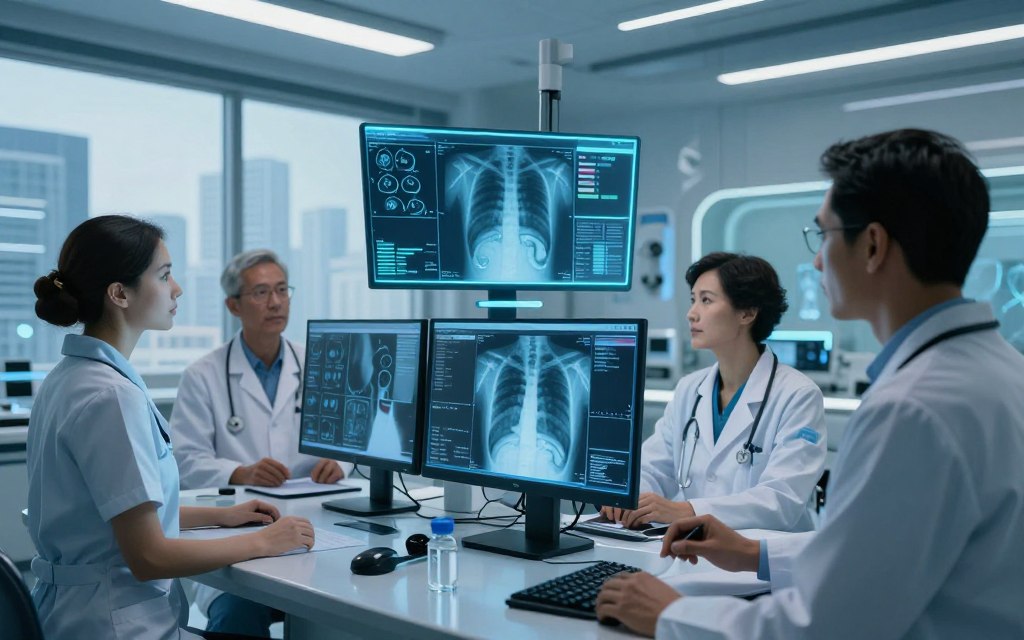

Many people ask, “will ai take over radiologists?” as technology advances. AI already supports image reading, work prioritization, and quality checks in medical imaging.
Radiology involves more than spotting visual patterns; it requires human insight and clinical judgment. This article examines the future of medical imaging, including AI’s abilities, limits, clinical uses, rules, and ethics. It also considers changes to radiologist training and patient care.
Our goal is a clear, evidence-informed view of artificial intelligence in healthcare, not a dramatic job-replacement prediction. AI in radiology is changing healthcare, but human expertise remains important. This discussion explores the relationship between technology and radiology.
Key Takeaways
- AI is influencing various aspects of radiology, from image interpretation to patient care.
- Radiology involves more than just visual pattern recognition; human insight is crucial.
- This article will explore both the benefits and limitations of AI in healthcare.
- Regulatory and ethical considerations are essential in the integration of AI.
- Training for radiologists may evolve as AI technologies advance.
1. The Current State of Radiology in the United States
Radiology in the United States faces rising demand and workforce challenges. An aging population and more chronic diseases drive the medical imaging demand. The need for radiology services in the United States is at an all-time high.
However, the radiologist shortage is growing, and the radiology workforce cannot keep pace. Radiologists are not evenly available across the country.
Rural hospitals and underserved communities often lack these essential services. This uneven access can delay diagnosis and treatment, especially during emergencies.
Workforce Shortages and Rising Demand
A radiologist shortage does not mean AI can replace radiologists. Instead, it increases pressure to boost productivity and cut wait times. Healthcare organizations invest in AI to improve workflow and expand specialist access through teleradiology.
Geographic Disparities in Radiologist Availability
Many U.S. regions face serious challenges because they lack radiologists. Rural areas often have fewer healthcare resources, making timely imaging difficult. This gap shows why innovative solutions are needed.
The Growing Volume of Medical Imaging
As medical imaging grows, healthcare providers must adapt. Detailed imaging protocols and new technology help drive this growth. Organizations use AI to manage demand while supporting safe clinical care.
| Factor | Impact on Radiology | Potential Solutions |
|---|---|---|
| Aging Population | Increased demand for imaging services | AI integration for efficiency |
| Geographic Disparities | Limited access in rural areas | Teleradiology solutions |
| Chronic Diseases | Higher imaging needs | Investment in AI technologies |
For more insights on AI’s role in radiology, read this article on emerging insights in radiology.
2. How AI Is Transforming Medical Imaging Today
AI is changing medical imaging in major ways. New tools help healthcare professionals improve diagnostic accuracy and work more efficiently. One key advance is the emergence of computer-aided detection, which helps radiologists find possible abnormalities in medical images.
These systems flag suspicious findings, measure body structures, and compare new images with earlier studies. They help radiologists manage workloads by placing urgent cases first. However, older systems are changing, and newer models use deep learning in radiology to perform much better.
Computer-Aided Detection Systems
Unlike earlier models that used set algorithms, modern AI systems use neural networks in healthcare. These networks learn from large collections of labeled medical images and improve with time. Their success depends on training data that is high-quality, diverse, and clinically relevant.
Deep Learning and Neural Networks
Convolutional Neural Networks in Imaging
At the center of this change are convolutional neural networks (CNNs). These specialized networks detect spatial patterns in X-rays, CT scans, MRI studies, ultrasound images, and mammograms. They analyze complex data sets and help radiologists make informed decisions.
These AI tools improve diagnosis, but they support radiologists rather than replace them. Cooperation between AI and human expertise can improve patient outcomes and make healthcare more efficient.
3. Will AI Take Over Radiologists? Separating Myth from Reality
The debate about AI replacing radiologists often includes myths. AI is advancing, but these systems still have limits. AI is not designed to fully replace radiologists; it supports their work in specific areas of medical imaging.
AI can triage images, find lesions, and measure features. Yet it struggles with unusual cases, incomplete histories, and conflicting findings. Radiologists combine scans with symptoms, lab results, and clinical context for informed treatment decisions.
What AI Can and Cannot Do
AI-assisted diagnosis works well in some areas, but it cannot solve every problem. It can quickly review large amounts of imaging data, helping with routine tasks. However, it lacks the human touch needed for unclear cases or patient conversations.
“AI will augment radiologists, but it won’t replace their critical thinking and clinical judgment.”
Expert Predictions and Industry Outlook
Experts predict that radiologists who use AI will become more effective. The radiologist job outlook includes routine automation, while communication, judgment, and accountability remain essential for human oversight in healthcare. The field may become more collaborative, with people and machines improving patient outcomes.
AI replacing radiologists is a common concern, but the reality is more complex. Radiology’s future depends on AI and human expertise working together, with patient care first.
| Capability | AI | Radiologists |
|---|---|---|
| Image Analysis | High efficiency in routine cases | Expert interpretation of complex cases |
| Decision Making | Limited to predefined algorithms | Integrates clinical context and patient history |
| Patient Interaction | None | Essential for building trust and understanding |
4. Key AI Technologies Reshaping Medical Imaging
New AI tools are changing medical imaging. They improve diagnostic accuracy and streamline work in radiology departments. Image recognition and natural language processing are two key areas that change how radiologists work.
Image Recognition and Pattern Detection
AI-driven image recognition in healthcare finds abnormalities in medical images with high precision. Advanced algorithms can segment organs or lesions, estimate volumes, and compare studies over time. This supports structured interpretation and helps radiologists make informed decisions.
Furthermore, pattern detection in radiology helps find trends and anomalies that human eyes may miss. For instance, AI systems can analyze thousands of images and find subtle changes. This can improve early diagnosis and treatment outcomes.
Natural Language Processing in Radiology Reports
Natural language processing (NLP) in radiology is changing how teams create and use reports. It extracts key findings, finds follow-up recommendations, and standardizes terms across systems. By finding missing documentation, NLP makes patient records more complete.
NLP also supports automated radiology reporting. It can create draft reports from imaging findings for radiologists to review and finalize. This saves time and lowers documentation errors.
Effective integration with PACS, electronic health records, and clinical communication systems is essential. It determines whether these tools improve patient care or add complexity to existing workflows.
| AI Technology | Functionality | Benefits |
|---|---|---|
| Image Recognition | Identifies abnormalities and segments images | Improves diagnostic accuracy |
| Pattern Detection | Analyzes trends in imaging data | Enhances early diagnosis |
| Natural Language Processing | Extracts findings and generates reports | Saves time and reduces errors |
5. The Role of Machine Learning in Diagnostic Accuracy
Machine learning in radiology is changing how radiologists improve diagnostic accuracy. It finds subtle patterns, reviews large data sets, highlights missed findings, and provides measurements. These tools can prompt a second review of high-risk studies, helping prevent missed details.
Machine learning is not infallible. A false negative can delay treatment, while a false positive can cause extra testing and anxiety. Clinicians must balance accuracy with possible errors.
Beyond diagnostic accuracy, radiology workflow automation can improve how teams work.
- Worklist prioritization: Automating the sorting of cases based on urgency.
- Automated protocol selection: Streamlining the imaging process for better outcomes.
- Exam quality checks: Ensuring that all images meet the necessary standards.
- Image reconstruction: Enhancing image quality for better diagnosis.
- Streamlined reporting: Reducing the time taken to generate reports.
Measure these gains through meaningful outcomes: turnaround time, diagnostic quality, patient safety, and clinician workload—not only automated tasks. Clinical decision support systems work best when they complement radiologist judgment and remain under ongoing monitoring.
6. Real-World Applications of AI in US Hospitals and Clinics
In recent years, hospitals across the United States have adopted AI for several imaging specialties. These tools improve accuracy and efficiency in diagnosis. AI now supports mammography, CT, and MRI analysis, helping radiologists improve patient outcomes.
AI in Mammography and Breast Cancer Screening
AI mammography systems are changing breast cancer screening technology. They flag suspicious regions in mammograms, support second reads, and prioritize exams for review, while clinical professionals make final decisions. This teamwork helps patients receive the most accurate assessments possible.
AI in CT and MRI Analysis
AI in CT and MRI is advancing in several areas, including:
- Lung nodule assessment
- Intracranial hemorrhage detection
- Pulmonary embolism alerts
- Cardiac imaging
- Organ segmentation
- Musculoskeletal analysis
- Automated measurements
These applications streamline workflows and improve diagnostic accuracy, allowing radiologists to focus on complex cases.
Stroke Detection and Triage
Stroke detection AI plays a crucial role in emergency care. It alerts care teams to urgent findings and supports timely interventions.
These systems rank patients by condition severity, so critical patients receive immediate attention. AI can notify and prioritize, but a radiologist must confirm the final diagnosis.
Overall, AI technologies are transforming medical imaging in hospitals and clinics. As these tools evolve, they can strengthen healthcare professionals’ work and improve patient care.
| Application | Benefit | Technology Used |
|---|---|---|
| Mammography | Improved detection rates | AI mammography systems |
| CT Analysis | Faster diagnosis | Deep learning algorithms |
| Stroke Detection | Timely interventions | Real-time alert systems |
7. Limitations and Risks of AI in Radiology
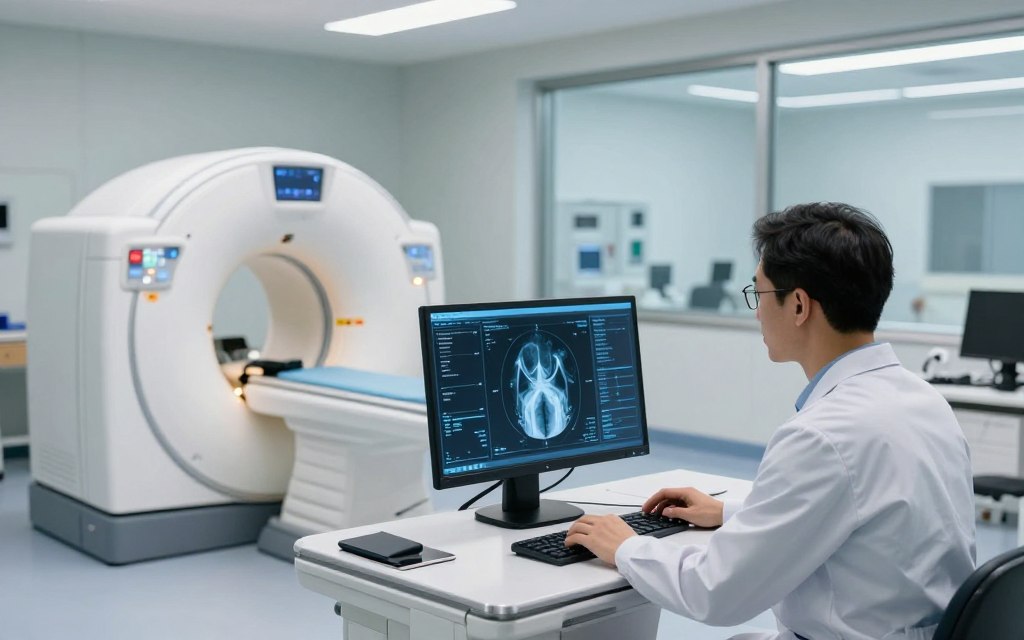
AI can improve radiology, but its limits and risks need careful attention. Medical imaging AI may improve diagnostic accuracy and efficiency. These radiology AI limitations require careful planning.
One major concern is data bias and AI bias in healthcare. Training datasets may not represent the diverse patients seen in clinical care. Race, age, sex, geography, and imaging equipment can affect algorithm performance.
Performance may decline for patient groups or imaging equipment missing from development data. This creates serious questions about the algorithmic transparency of radiology AI systems. Stakeholders need to know how algorithms work and which data supports their outputs.
Legal and professional concerns also matter. medical AI liability may arise from missed findings, incorrect alerts, or software malfunctions. Hospitals must address responsibility among providers, developers, and institutions through governance, monitoring, and user training.
AI safety and effectiveness depend on the entire sociotechnical system. Success depends not only on benchmark scores, but also on workflow fit and user understanding. A comprehensive approach is essential for adopting AI in medical imaging.
| Limitation | Description | Impact |
|---|---|---|
| Data Bias | Training data may not represent all patient demographics. | Inaccurate diagnoses for underrepresented groups. |
| Performance Degradation | Models may not perform well with different patient groups. | Increased risk of diagnostic errors. |
| Legal Liability | Unclear responsibility for AI errors. | Potential legal repercussions for healthcare providers. |
8. The Evolving Role of Radiologists in an AI-Driven Era
AI is changing the future role of radiologists beyond traditional image reading. Artificial intelligence helps each radiologist become a radiologist clinical consultant and supports better patient outcomes. Radiologists now add clinical guidance to their work as image readers.
Radiologists now support many parts of patient care, including:
- Protocol selection: Choosing the most appropriate imaging protocols for specific clinical scenarios.
- Image quality oversight: Ensuring that the images produced meet high-quality standards for accurate diagnosis.
- Multidisciplinary tumor boards: Collaborating with other specialists to develop comprehensive treatment plans.
- Patient communication: Explaining imaging results and implications to patients and their families.
- Interventional planning: Assisting in planning and executing minimally invasive procedures.
- Coordination with referring physicians: Working closely with other healthcare providers to ensure seamless patient care.
As AI handles repetitive analysis, radiologists can focus on complex reasoning, priorities, and accountability. This human-AI collaboration helps them review algorithm results, spot uncertainty, and examine conflicting findings. These steps help determine when patients need more imaging or clinical information.
The future role of radiologists grows stronger with AI rather than becoming less important. Through augmented radiology, they build expertise and remain vital to healthcare. Radiology continues improving patient care through new methods and teamwork.
9. Regulatory Landscape: FDA Approvals and AI in Medical Imaging
Rules for AI in medical imaging are complex and still changing. The US Food and Drug Administration (FDA) oversees FDA medical imaging software and AI-enabled medical devices. These rules require imaging tools used in clinical care to meet safety and efficacy standards.
FDA authorization applies only to a defined intended use. An approved algorithm cannot replace a radiologist or perform every type of interpretation. Each tool receives a strict review of labeling, indications, intended users, contraindications, and performance information.
Current FDA-Approved AI Tools
Several FDA-approved radiology AI tools now support radiologists. They help diagnose conditions by analyzing medical images more efficiently. The table lists notable examples.
| AI Tool | Type | Primary Use | Approval Year |
|---|---|---|---|
| Image Analysis AI | Diagnostic Software | Chest X-ray Analysis | 2020 |
| Mammography AI | Screening Tool | Breast Cancer Detection | 2019 |
| CT Scan AI | Diagnostic Software | Pulmonary Embolism Detection | 2021 |
Future Regulatory Directions
Future rules will likely address continuously learning models and software updates. As AI evolves, the FDA must address cybersecurity, post-market surveillance, and real-world performance monitoring. Transparency and clinical validation of AI will help maintain patient trust.
AI medical device regulation must distinguish FDA authorization, peer-reviewed evidence, institutional validation, and improved patient outcomes. This difference helps show whether tools follow rules and provide real benefits in clinical settings.
10. Ethical Considerations and Patient Trust
AI in radiology raises ethical questions that can affect patient trust. Healthcare providers must protect transparency and patient privacy as they adopt these tools. Ethical AI in healthcare seeks progress while helping patients feel safe during treatment.
Transparency and explainability are critical. Clinicians should understand explainable AI radiology tools, including their purpose, limits, and possible failure modes. Patients should know when AI helps their care, even when radiologists make final interpretations.
This knowledge builds trust and helps patients take part in healthcare decisions.
10.1. Transparency and Explainability
Clear communication about AI’s role in diagnosis is essential. Providers should not overstate AI’s abilities; they should explain its benefits and limits. This approach builds trust and supports accountability.
10.2. Patient Privacy and Data Security
Patient privacy medical imaging practices are another vital concern. Large imaging datasets and cloud platforms create risks without proper management. Healthcare data security needs strong access controls, audit trails, and safeguards against cybersecurity incidents.
Ethical governance helps ensure fair performance across diverse patient populations.
Ultimately, responsible AI use supports patient trust. Advanced technology alone is not enough; radiology also needs accountability and clear communication. As radiology evolves, these ethical priorities will help maintain patient confidence.
11. Preparing for the Future: Training and Education for Radiologists
Preparing radiologists for the future requires new radiologist education. As AI transforms medical imaging, radiology AI training must help radiologists gain new skills. Understanding model performance, recognizing bias, and interpreting uncertainty will become essential skills in practice.
Collaboration will play a vital role in this new field. Radiologists should build medical imaging technology skills and work closely with data scientists, engineers, and ethicists. Together, they can support safe and effective AI tools. “The integration of technology in medicine requires a multidisciplinary approach,” many experts agree.
Medical schools and residency programs must adapt by adding practical training in imaging informatics, digital health, and regulatory concepts. Residency training in radiology should complement traditional medical education. Future radiologists must stay skilled in anatomy, pathology, and patient-centered care.
12. Conclusion
The future of radiology is not about AI taking over radiologists entirely. Instead, AI and radiologists can work together to advance medical imaging innovation.
Automation can streamline triage and decision support, making workflows more efficient. Radiologists can gain better measurements and wider access to imaging expertise.
Although AI offers clear benefits, challenges remain. Data bias, accountability, and the need for human judgment cannot be ignored.
The radiology career outlook favors professionals who embrace AI and provide informed, clinically integrated care. This teamwork between technology and human expertise supports better patient outcomes.
Healthcare leaders, clinicians, and patients should prioritize evidence-based practices, transparency, and education when adopting AI technologies. These priorities can help AI integration in radiology improve healthcare experiences and outcomes.


 By
By



 By
By