
In today’s digital world, artificial intelligence has changed how we make and use visual content. The rise of generative AI systems is a major breakthrough. It’s one of the biggest tech advancements we’ve seen.
These smart systems are changing creative fields in many areas. From ads to movies, AI visuals are everywhere. They do more than just make things easier.
This tech is a big change in digital making. It lets experts create amazing images fast and accurately. It also opens up new ways to be creative.
Knowing how these systems work helps us understand artificial intelligence today. They use complex algorithms and huge datasets. This makes a strong tool for making images.
As more people use it, its importance keeps growing. It’s changing how we work and making us rethink old ways of creating. The future of innovation looks very exciting.
Understanding the Fundamentals of AI Image Generation
Before we dive into how AI makes images, let’s understand the basics. This part explains the key ideas that make AI image creation different from regular digital art.
Defining Artificial Intelligence in Visual Creation
Artificial intelligence in visual creation means systems that make images on their own, without human help. They use complex algorithms to look at patterns and make new images based on what they’ve learned.
These systems learn from huge amounts of images. They spot patterns, colours, textures, and how things are put together. This helps them understand what makes images look good.
This is a big change from old computer graphics, where artists did everything by hand. AI image creation is a new way of making art, where machines do it all by themselves.
The Evolution from Traditional Graphics to Generative AI
The move from old graphics to AI has taken many years. In the beginning, making computer graphics was very hard and needed lots of manual work.
Later, graphic design software gave artists better tools, but they were all made by hand. But then, machine learning changed things. It let systems learn from images on their own.
Generative adversarial networks (GANs) were a big step forward. They could make images that looked very real. Now, we have even better models that make images that are almost indistinguishable from real ones.
Core Components of AI Image Generation Systems
AI image systems have a few key parts that work together. Each part does something special in making images.
Neural networks are the heart of these systems. They work like our brains to understand images. As one source says, “Artificial neural networks mimic the brain’s process to recognise patterns… They can see images in a way similar to humans.”
Training datasets are the main learning material for these systems. They are huge collections of images. This helps the AI learn about different images and styles.
How the system works is also important. There are different ways to do this, like:
- Generative adversarial networks (GANs)
- Variational autoencoders (VAEs)
- Diffusion models
- Transformer architectures
The last key part is how fast the system can work. It needs lots of power to do all the calculations needed to make images. Fast GPUs and special hardware help a lot.
All these parts together make AI systems that can create amazing images. They can make everything from real-looking photos to abstract art. The mix of neural networks, training data, and power defines what AI can do today.
How AI Image Generation Technology Actually Works
AI systems create visual content through a complex process. It involves algorithms and training data. This turns math into beautiful images that seem made by humans.
Neural Networks and Deep Learning Foundations
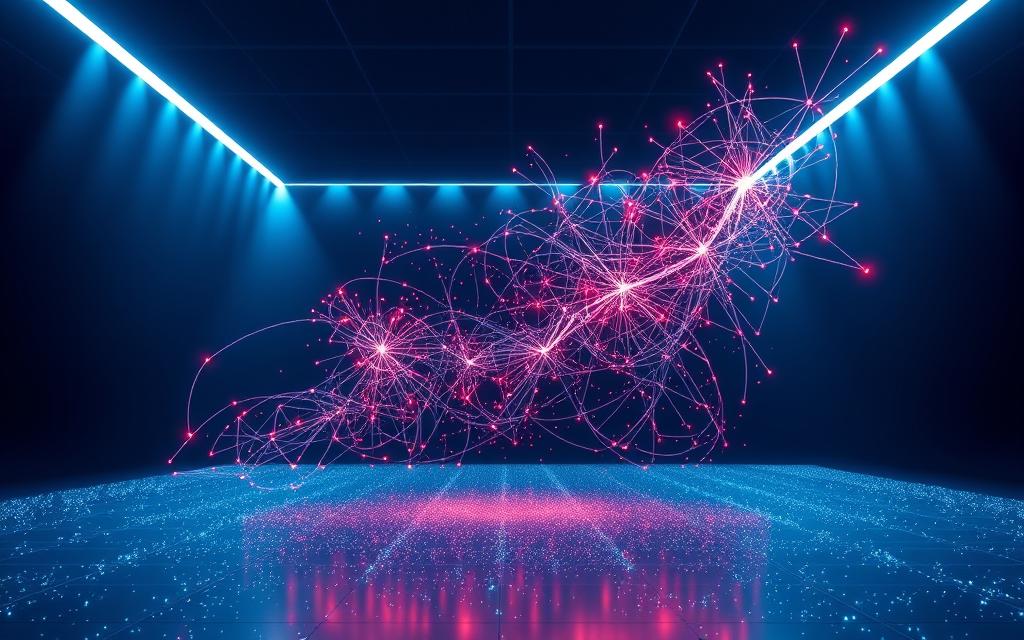
Artificial neural networks are key to image generation. They mimic the brain’s neurons.
Deep learning adds more layers to these networks. Each layer handles more complex data.
Convolutional neural networks (ConvNets) focus on visual data. They’re great at spotting patterns and objects in images.
The Role of Diffusion Models in Modern Systems
Diffusion models lead in AI image generation. They add noise to data and learn to remove it.
This method is inspired by thermodynamics. Researchers say it creates detailed images from random noise.
Diffusion models outperform older GANs. They produce diverse and detailed images.
Training Processes: From Data Collection to Model Refinement
Training AI image generators is a detailed process. Each step improves the model’s skills.
Data Acquisition and Preparation Techniques
Good training data is essential for AI models. They need millions of high-quality images.
Collecting data involves getting images from various sources. Each image is annotated by hand.
Preprocessing standardises the data. It includes resizing and colour normalisation.
Training Parameters and Computational Requirements
Model training requires adjusting many parameters. Learning rates and batch sizes are critical.
Building these models needs a lot of computing power. They require powerful GPUs and lots of time.
The table below shows the computing needs for different models:
| Model Type | Training Time | GPU Memory | Dataset Size |
|---|---|---|---|
| Basic GAN | 2-4 days | 8-16GB | 50K-100K images |
| Standard Diffusion | 5-10 days | 16-32GB | 500K-1M images |
| Advanced Diffusion | 2-4 weeks | 32-64GB | 2M-5M images |
This table shows the big resources needed for advanced image generation. The more complex the model, the better the images.
Leading AI Image Generation Platforms and Technologies
The world of AI image creation has grown a lot. Many top platforms have come up, each with its own special features. They meet different creative needs and tastes.
OpenAI’s DALL-E: Capabilities and Limitations
DALL-E is a top AI image maker today. OpenAI made it. It uses a big language model to turn text into pictures.
This system can make many kinds of images. It can create real scenes or abstract art. DALL-E 2 is even better, with clearer and more detailed pictures.
But, there are some limits:
- It can’t make images that are too sensitive or harmful.
- It sometimes gets the text wrong.
- It has rules for using it in some businesses.
“DALL-E’s mix of language and pictures is a big step forward in AI.”
Midjourney: Artistic Quality and Community Features
Midjourney stands out for its art style and community feel. It’s made for creating beautiful, painterly images. It’s all about the look.
It works mainly on Discord. This lets users share their work, tips, and feedback. It’s a place for artists to learn and get inspired together.
Its big pluses are:
- It always makes pictures that look great.
- It has a lively community for sharing and learning.
- It keeps getting better with new features.
Stable Diffusion: Open-Source Advantages
Stable Diffusion is different because it’s open-source. Stability AI made it. It lets users change and improve it for their needs.
Being open-source means developers can make it better. They’ve created special versions and added new things.
Its main benefits are:
- It’s open, so you can see how it works.
- You can make it fit your specific needs.
- It’s cheaper to use because it’s open-source.
Google’s Imagen and Other Emerging Competitors
Google’s Imagen is Google’s first step into AI images. It uses Google’s research in language and vision. It’s very good at making real pictures and understanding text.
Other new players are coming too. They each bring something new to the field. The competition is getting more interesting as new ideas come in.
| Platform | Access Type | Key Strength | Primary Audience |
|---|---|---|---|
| DALL-E | Commercial API | Versatility | Business users |
| Midjourney | Community access | Artistic quality | Creative professionals |
| Stable Diffusion | Open source | Customisation | Developers & researchers |
| Google Imagen | Research preview | Photorealism | Enterprise applications |
There are many AI platforms to choose from. You can find the right one for your needs, whether for work, art, or research.
Practical Applications Across Industries
AI image generation is not just about tech. It shows its worth in many fields. People use it to solve problems and come up with new ideas.
Creative Arts and Digital Media Production
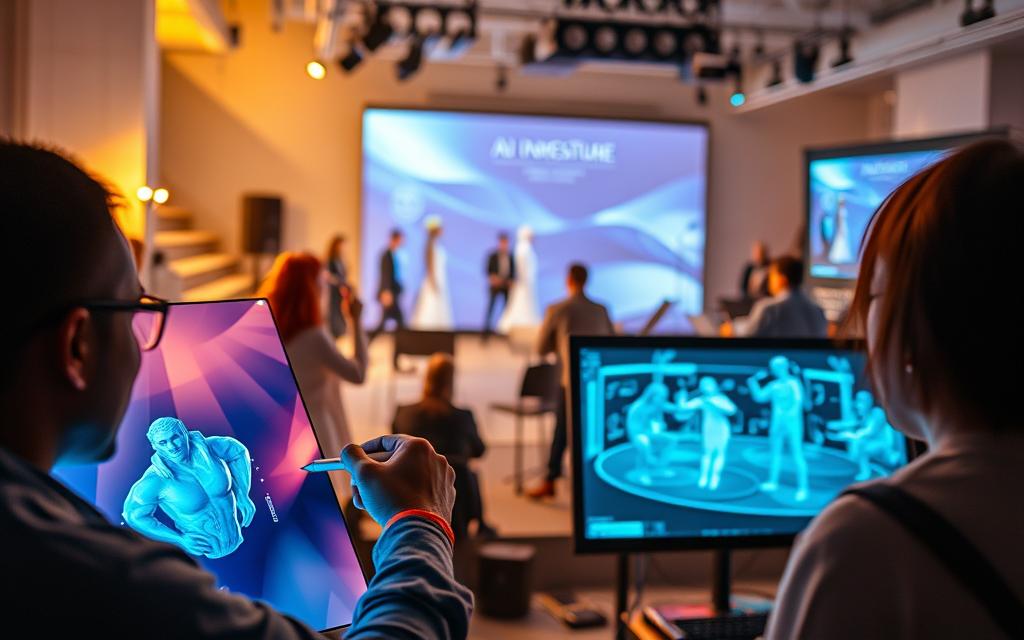
Film and game makers use AI for art and planning. Solo artists can try out new styles easily.
These tools help speed up getting ready for a project. They keep the creative vision alive while making changes fast.
Marketing and Advertising Campaigns
Brands use marketing AI to make content that speaks to people. They can change things to fit different groups and places.
Social media folks can make cool graphics without a design team. Trying out different looks is easier than before.
Architectural and Product Design Visualisation
Architects show off ideas before they start building. Clients can see what the space will look like early on.
Product designers can quickly show off different looks. They can see how materials and colours work right away.
Educational and Research Applications
Teachers make special pictures for hard subjects. It makes hard ideas easier to understand.
Researchers make diagrams for papers and talks. It makes their findings easier to share.
These AI applications show how it can change things in creative industries and other areas.
Ethical Considerations and Responsible Usage
Artificial intelligence is changing how we create images, raising big ethical questions. The fast growth of AI image tech brings new challenges. We need to think carefully and use these tools wisely.
Copyright and Intellectual Property Challenges
Copyright and intellectual property are big issues with AI image making. Many AI systems use huge datasets without asking creators. This is a problem.
The ImageNet dataset has over 14 million images but doesn’t own them. This makes us wonder about fair use and paying creators in the AI age.
Legal systems are trying to keep up with AI. Courts and lawmakers around the world are figuring out how to apply old laws to new AI tech.
Bias and Representation Issues in Training Data
The quality of training data affects AI’s output. If the data is biased or not diverse, AI can spread and even increase these biases.
Bias in AI can lead to bad results in image making. Some groups might be left out or shown unfairly in AI images. This can make old problems worse.
To fix this, we need to work on making training data better and diverse. Teams that are diverse can help make AI that’s fair for everyone.
Authenticity and Misinformation Concerns
AI can make images that look very real, which is a big problem. It’s hard to tell if an image is real or made by AI. This can be used in bad ways.
Deepfakes and fake media can hurt our trust in what we see. This is a big deal for news, law, and keeping our reputation safe.
We need to find ways to spot AI-made content and know where it comes from. Being open about AI use helps keep our trust in digital media.
Environmental Impact of Computational Resources
AI needs a lot of computer power to work, which uses a lot of energy. This is bad for the planet.
People are looking for ways to use less energy and make AI better for the environment. Using less power and finding new ways to train AI are important steps.
It’s a big challenge to keep improving AI without harming the planet. We need to find a balance.
| Ethical Concern | Key Challenges | Potential Solutions |
|---|---|---|
| Copyright Issues | Unauthorised use of copyrighted training data | Licensed datasets, creator compensation models |
| Bias in Outputs | Reinforcement of stereotypes, exclusion | Diverse training data, bias detection tools |
| Misinformation Risk | Difficulty detecting AI-generated content | Watermarking, provenance standards |
| Environmental Impact | High energy consumption during training | Efficient algorithms, renewable energy use |
We need to work together to solve these ethical problems. By being careful and responsible, we can make AI image tech a good thing for everyone.
The Future Landscape of AI-Generated Imagery
Artificial intelligence in visual creation is growing fast. We’re on the edge of big changes in how we make and use computer images. This section looks at the exciting world of AI visuals, including new tech, market trends, and rules.
Technical Advancements on the Horizon
New tech is key to AI image growth. Researchers are working hard in several areas. These include:
- Enhanced photorealism: Soon, AI images will look almost real.
- Dynamic scene generation: AI will create moving scenes and animations.
- Contextual understanding: AI will get better at understanding complex ideas and styles.
- Reduced computational requirements: New algorithms will need less power and energy.
These changes will make top-notch visual tools available to all. The difference between AI and human-made images will shrink a lot.
Market Trends and Commercial Adoption
The market for AI images is growing fast in many areas. AI trends show how different sectors are adopting AI:
| Industry Sector | Current Adoption Rate | Projected Growth (2024-2026) | Primary Use Cases |
|---|---|---|---|
| Marketing & Advertising | High | 45% | Campaign visuals, product mockups |
| Entertainment & Media | Medium | 62% | Concept art, pre-visualisation |
| E-commerce & Retail | High | 38% | Product photography, virtual try-ons |
| Architecture & Design | Medium | 51% | Visualisations, client presentations |
Recent studies on AI image generation suggest a few things. We’ll see fewer platforms and more specialisation. AI tools will work better with traditional design software.
Regulatory Developments and Industry Standards
As AI gets better, rules and standards are being made. The regulatory AI scene is growing. It focuses on:
- Copyright and attribution for AI images
- When to say AI helped make an image
- Keeping data safe in AI training
- Reporting on AI’s environmental impact
Groups are working together to set good practices. These standards will help build trust and guide ethical use. They’re key for AI to be used right across industries.
The mix of new tech, market growth, and rules will shape AI image future. This balanced approach lets us enjoy AI’s amazing abilities while keeping things safe and responsible.
Conclusion
AI image generation is a big step forward in creative tech. This article looked at how systems like DALL-E, Midjourney, and Stable Diffusion work. They use neural networks and diffusion models.
These tools are getting better and are used in many areas. They help in making art, designing products, and even in education. They show great promise, but there are also challenges.
It’s important to think about the ethics of this technology. Issues like copyright, bias, and fake information need to be solved. As it grows, we’ll see better tech and more rules.
Knowing about AI image generation helps experts use it wisely. This summary shows how vital it is in our digital world. The impact of generative AI will keep changing how we make and share things online.
FAQ
What is AI image generation and how does it relate to artificial intelligence?
AI image generation uses artificial intelligence to create images. It’s part of generative AI, which makes new images from text or pictures. This method is different from old ways of making graphics, making it fast, flexible, and customisable.
How do diffusion models contribute to AI image generation?
Diffusion models are key in AI image making. They start with random noise and improve it step by step. This makes detailed, realistic images, seen in tools like Stable Diffusion and DALL-E.
What are the primary applications of AI image generation across industries?
AI image generation is used in many areas. It helps in creative work, marketing, and design. It’s also useful in education and research, making high-quality images quickly and cheaply.
What ethical issues are associated with AI image generation?
Ethical problems include copyright and bias. Models might use copyrighted material without permission. There’s also worry about fake images and the environmental impact of training these models.
How do leading platforms like DALL-E, Midjourney, and Stable Diffusion differ?
DALL-E is great at making accurate images from text. Midjourney focuses on art and has community features. Stable Diffusion is open-source, allowing more control. Each has its own strengths and user needs.
What does the future hold for AI-generated imagery?
The future will see better images and more use in industries. There will be new rules and standards for ethics and law. We might also see more efficient and fair AI models.
How are neural networks trained for image generation?
Neural networks learn from big datasets of images and text. They get better at making images from text over time. This needs lots of computer power and careful data to make high-quality images.
Can AI-generated images be used commercially without legal issues?
Using AI images for business is tricky due to copyright laws. Some platforms offer licences, but using copyrighted data without permission is risky. Always check the platform’s terms and consider legal issues.

 By
By