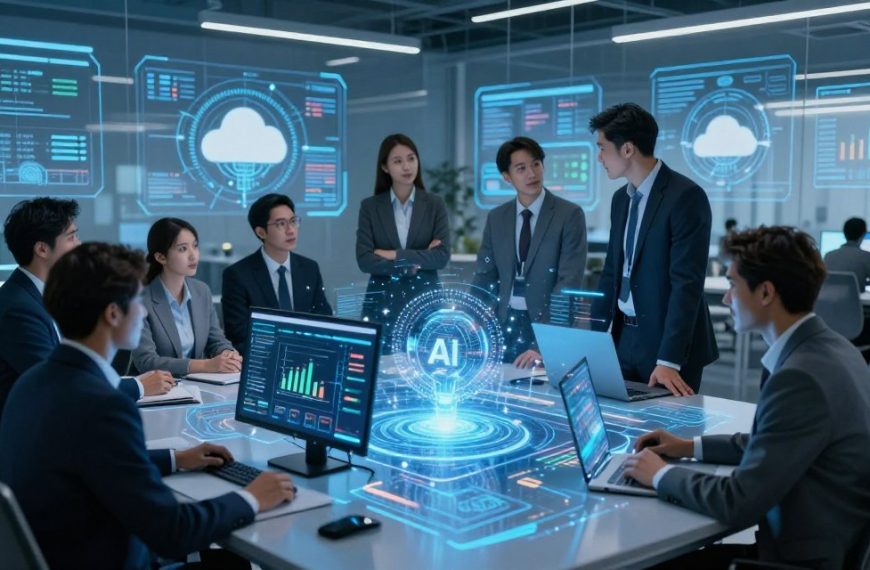


Advanced technology now drives a seismic shift in global commerce and community dynamics. Systems capable of creating original content through data analysis mark a watershed moment comparable to the internet’s emergence. Microsoft’s £7.9 billion commitment to OpenAI underscores this strategic priority, mirroring broader industry recognition of its potential.
Economic projections reveal staggering implications. PricewaterhouseCoopers forecasts suggest AI could inject £12 trillion into worldwide markets by 2030. Yet adoption rates tell another story – barely a third of enterprises currently use these tools effectively. This gap between capability and implementation defines today’s commercial landscape.
The opportunities extend beyond financial growth. From healthcare diagnostics to urban planning, intelligent systems promise to redefine service delivery and problem-solving. McKinsey’s analysis suggests productivity gains equivalent to adding 280 million full-time workers globally. Such changes demand careful navigation of ethical considerations and workforce adaptation strategies.
That broader commercial context becomes clearer when you look at the state of ai adoption and how teams apply AI in day-to-day operations.
Organisations face dual imperatives: harness data-driven innovation while addressing societal concerns about job displacement and information integrity. The coming years will test leadership teams’ ability to balance technological ambition with responsible implementation. This analysis explores both the mechanics and consequences of this unfolding transformation.
Technological Foundations and Market Disruption
The digital landscape shifted irrevocably when transformer architectures emerged in 2017. These neural network designs enabled systems to process sequential data with unprecedented efficiency, laying groundwork for today’s intelligent tools.
The Rise of Foundational Models and Large Language Models (LLMs)
Modern systems learn through self-supervision, analysing billions of text fragments without human labelling. This approach allows adaptation across industries – from drafting legal contracts to optimising supply chains. ChatGPT’s ability to generate marketing copy and debug software exemplifies this capability.
Disrupting Traditional Business Processes and Innovation
Established firms face mounting pressure to evolve. Salesforce integrates ChatGPT into customer relationship platforms, while Shopify merchants use AI for personalised product descriptions. The table below illustrates key sector transformations:
| Industry | Traditional Approach | AI-Driven Solution |
|---|---|---|
| Retail | Manual inventory tracking | Predictive stock management |
| Healthcare | Standard treatment plans | Personalised care algorithms |
| Software | Hand-coded prototypes | AI-generated code snippets |
Google’s deployment of 20+ AI projects signals intensifying competition. As businesses adopt these technologies, operational frameworks undergo radical simplification. The challenge lies in balancing rapid innovation with ethical data usage and workforce preparedness.
How generative ai is transforming business and society
Modern enterprises face a paradigm shift as intelligent systems redefine core operations. Over 75% of measurable benefits concentrate in customer-facing roles and technical functions, with banking institutions projecting £260 billion annual gains. This evolution extends beyond mere automation, fostering collaborative human-machine workflows.

Enhancing Productivity and Unlocking Creative Potential
Routine tasks now undergo rapid processing, freeing staff for strategic thinking. Marketing teams craft personalised campaigns 60% faster, while developers review code with 40% greater accuracy. Retailers using predictive inventory tools report 23% fewer stock shortages.
Real-World Applications Across Industries
Practical implementations demonstrate transformative potential:
| Industry | Key Application | Impact |
|---|---|---|
| Financial Services | Fraud detection algorithms | £340bn annual savings |
| Consumer Goods | Dynamic pricing models | 18% revenue growth |
| Pharmaceuticals | Compound analysis | 30% faster R&D cycles |
Strategic Considerations for Adoption and Integration
Successful implementation requires phased rollouts and workforce upskilling. Early adopters prioritise ethical guidelines and cross-department training programmes. One FTSE 100 firm achieved 89% staff adoption through tailored change management strategies.
Operational leaders must balance efficiency gains with cultural adaptation. As systems handle 50% of repetitive work by 2040, organisations redefining roles rather than reducing headcount show superior long-term results.
Navigating Opportunities, Risks and Workforce Transformation
Organisational strategies now confront dual realities of unprecedented potential and complex vulnerabilities. Leaders must weigh productivity gains against ethical considerations while maintaining stakeholder confidence. Stanford University research reveals 63% of implementation challenges stem from governance gaps rather than technical limitations.
Balancing Economic Benefits with Potential Pitfalls
The pursuit of benefits demands rigorous risk frameworks. A recent UK survey shows 41% of firms face intellectual property disputes when deploying automated systems. Effective strategies address both operational and reputational factors:
| Opportunity | Associated Risk | Mitigation Approach |
|---|---|---|
| 15% cost reduction | Data leakage | Encrypted workflows |
| 20% faster innovation | Algorithmic bias | Diverse training data |
| 30% productivity gains | Workforce resistance | Change management programmes |
Reskilling, HR Implications and Future Workforce Needs
Traditional roles evolve as machines handle repetitive tasks. Barclays reports 68% of UK employees require AI literacy training within two years. Forward-thinking companies adopt hybrid learning models combining technical skills with human-centric capabilities:
- Monthly upskilling workshops increase retention by 27%
- Cross-functional mentorship programmes boost adoption rates
- AI ethics certifications become hiring differentiators
This approach transforms HR functions from recruitment engines to capability architects. The future workforce thrives where human creativity guides machine efficiency.
Conclusion
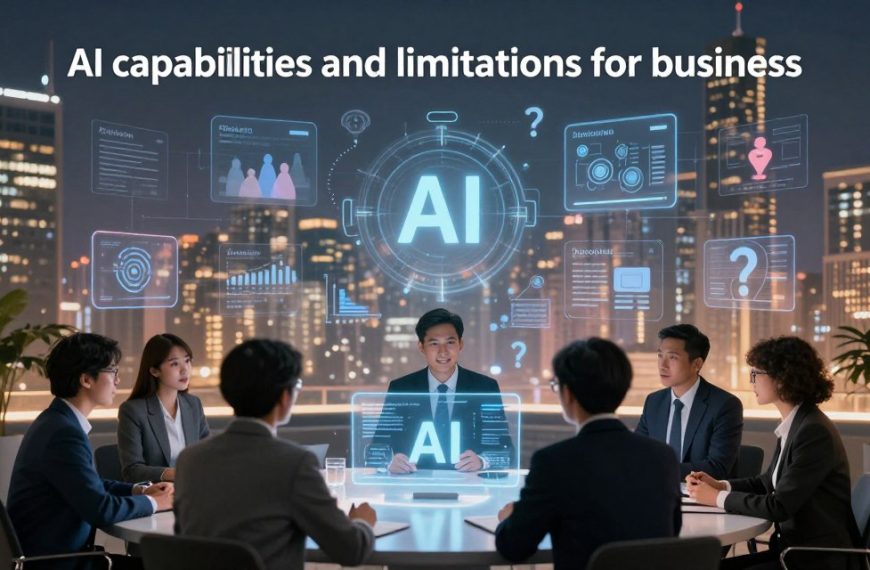
We stand at a critical juncture where technological capabilities demand equally advanced governance frameworks. The opportunities for growth and productivity gains remain undeniable, yet realising them requires meticulous strategic planning. McKinsey’s findings emphasise that cross-sector collaboration forms the bedrock of sustainable implementation.
Business leaders must act decisively to address dual challenges: harnessing innovation while safeguarding societal interests. Successful organisations combine technical expertise with ethical practices, ensuring workforce development keeps pace with operational changes. This balanced approach turns theoretical potential into tangible value.
The road ahead demands continuous adaptation. Companies prioritising skills development and stakeholder engagement will likely thrive in this evolving landscape. As technologies mature, their true impact will emerge through measured, human-centred strategies.
Economic transformation on this scale presents both risks and rewards. With proactive leadership and shared responsibility, businesses can steer this journey towards inclusive growth. The future belongs to those who view change not as disruption, but as a catalyst for progress.

 By
By